Water Resource Considerations
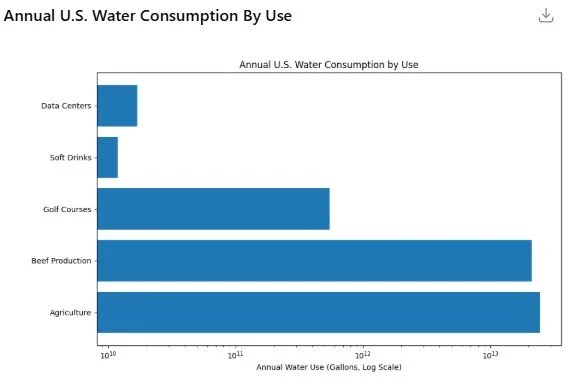
Water plays a critical role in cooling data center systems, especially in traditional evaporative cooling methods.
Servers generate significant heat as they process and store data, and keeping that equipment within safe temperature ranges is essential for reliability and uptime.
Water use is a real and important consideration for data centers, but it is also an area of rapid innovation. As demand for cloud computing and AI grows, the industry is actively investing in technologies and practices that reduce water impacts, improve efficiency, and align data center development with long-term water sustainability.
Not all data centers use water the same way
While it’s true that some data centers use water to cool their servers, the industry is rapidly shifting toward more sustainable cooling technologies.
Many modern facilities use air-cooled, closed-loop, or hybrid systems that drastically reduce water consumption — or eliminate it altogether.
In fact, some of the largest data center operators now prioritize water usage effectiveness alongside energy efficiency. They often reuse water, source it from non-potable supplies, or design systems to operate in “water-stressed” regions with minimal environmental impact. As a result, the water footprint of data centers is becoming smaller and smarter, especially as operators respond to growing environmental concerns and regulations.
Some organizations are focusing on ensuring water usage is replenished and that they are supporting local water stewardship projects.
For example, Google supported the Alliance for the Chesapeake Bay in its efforts to protect and restore water quality in the Chesapeake Bay and its tributaries. Its funding facilitated the installation of approximately 13 acres of forested riparian buffers on five farms within Virginia’s Chesapeake Bay watershed. These edge-of-field buffers are designed to intercept and filter runoff, which often contains high concentrations of nutrients from agricultural operations in the region. Beyond improving water quality, these forested buffers are anticipated to offer wildlife habitat, sequester carbon, and help control erosion resulting from excessive runoff.
Water source matters
Increasingly, data centers are:
Using reclaimed or recycled wastewater instead of drinking water. Using reclaimed water helps protect drinking-water systems while supporting economic development.
Partnering with utilities on water-reuse programs.
Locating facilities where sustainable water supplies are available.
Additional Resources:


